If you’re just getting into watercolor, the brush aisle can feel like some kind of medieval weapon shop. Giant mops, weird fan brushes, tiny things that look like they belong in surgery kits… and somehow every YouTube artist swears you need all of them immediately. You really don’t.
Honestly, a beginner can do an absurd amount with just a handful of dependable brushes. The trick isn’t owning fifty brushes. It’s learning what a few good ones actually do.
So let’s talk about the little watercolor “starter party” I recommend over and over again.
A number 8 round brush is probably the closest thing watercolor has to an all-purpose kitchen knife. If I could only paint with one brush for a while, this would be the one I’d grab. It’s big enough to hold a decent amount of water, but still small enough to paint windows, trees, flowers, little details, all that good stuff.
This is the brush that teaches you the magic of pressure control. Use the tip lightly and you get delicate little lines. Press down more and suddenly you’ve got broad strokes for leaves, clouds, shadows, whatever. A good round brush feels almost alive once you get used to it.
Then there’s the number 12 round brush — basically the slightly older sibling that pays taxes and has its life together.
The number 12 is wonderful for bigger washes, loose landscapes, skies, and all the juicy expressive stuff beginners are often too scared to try at first. Bigger brushes actually help you loosen up. Tiny brushes tempt people into overworking everything to death. We’ve all been there. Suddenly you’re painting individual blades of grass and wondering why the painting looks exhausted.
The number 12 encourages confidence. It says, “Relax. Throw some paint around. Trust the watercolor.”
Now let’s talk about the half-inch flat brush, which is sneakily one of the most useful brushes you can own.
Flat brushes are fantastic for clean edges, sharp shapes, quick skies, water reflections, and architectural stuff. They’re also weirdly satisfying to use. There’s something about dragging a flat brush across paper that makes you feel like you know what you’re doing even when you absolutely do not.
They’re also excellent for lifting color. Got a cloud that disappeared? Flat brush. Need sunlight on water? Flat brush. Accidentally made mud and need to rescue something? Again: flat brush to the rescue.
And then we have the number 3 rigger — the skinny weird little brush people buy and then stare at suspiciously.
Riggers are made for long thin lines. Tree branches, fishing lines, whiskers, telephone wires, grasses, sailboat rigging… hence the name. This brush holds more paint than you’d expect, so you can make elegant flowing lines without stopping every two seconds.
At first it feels awkward. Most beginners make stiff scratchy marks with it because they’re trying too hard to control it. The trick is to loosen your grip a little and let the brush dance around. A rigger likes confidence. Even fake confidence works.
And finally, the oddball of the group: the small hog hair bristle brush.
This one is not soft and graceful. This is your chaos brush.
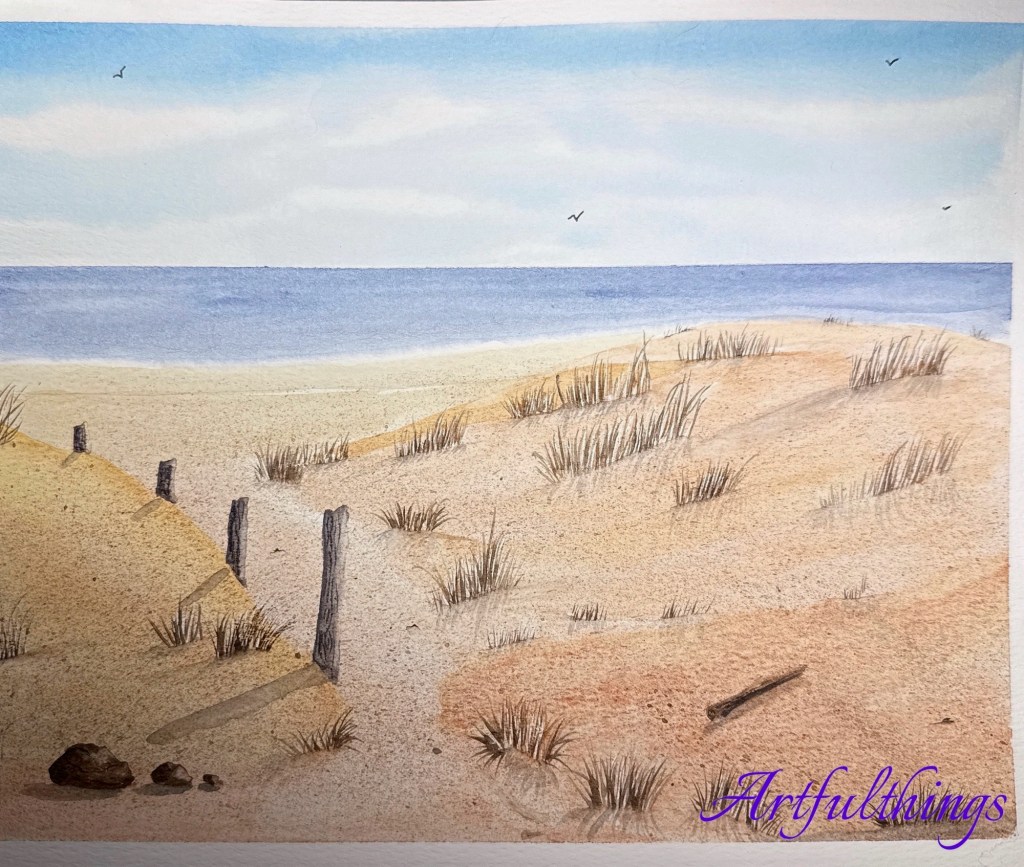
Bristle brushes are fantastic for texture. Dry grass, weathered wood, rocky paths, crashing waves, rough tree bark — all that crunchy organic stuff watercolor sometimes struggles with using soft brushes alone.
I also love using one for dry brushing. That scratchy broken texture can make a painting suddenly feel alive. It’s messy in the best way. Watercolor beginners often get obsessed with making everything smooth and perfect, but texture is where paintings start getting personality.
One thing I wish more beginners understood: your brushes do not need to be expensive masterpieces blessed by watercolor monks in the mountains. Seriously. Nice brushes are lovely, but technique matters more than fancy tools. A reasonably decent brush you actually use is better than a luxury brush sitting untouched because you’re afraid to ruin it.
And yes — your favorite brush will eventually become horrifying. The tip will split. It’ll bend sideways. It may start resembling an exhausted broom. This is normal watercolor behavior.
Honestly, some of my favorite effects come from brushes that are technically “ruined.”
So if you’re building a starter set, don’t overcomplicate it. A number 8 round, number 12 round, half-inch flat, number 3 rigger, and a small hog bristle brush can take you shockingly far. Landscapes, florals, animals, loose sketching, atmospheric scenes — you can do a ton with just those.
The rest is mostly practice, experimentation, and occasionally yelling at water.


 Artful things
Colorful comments appreciated