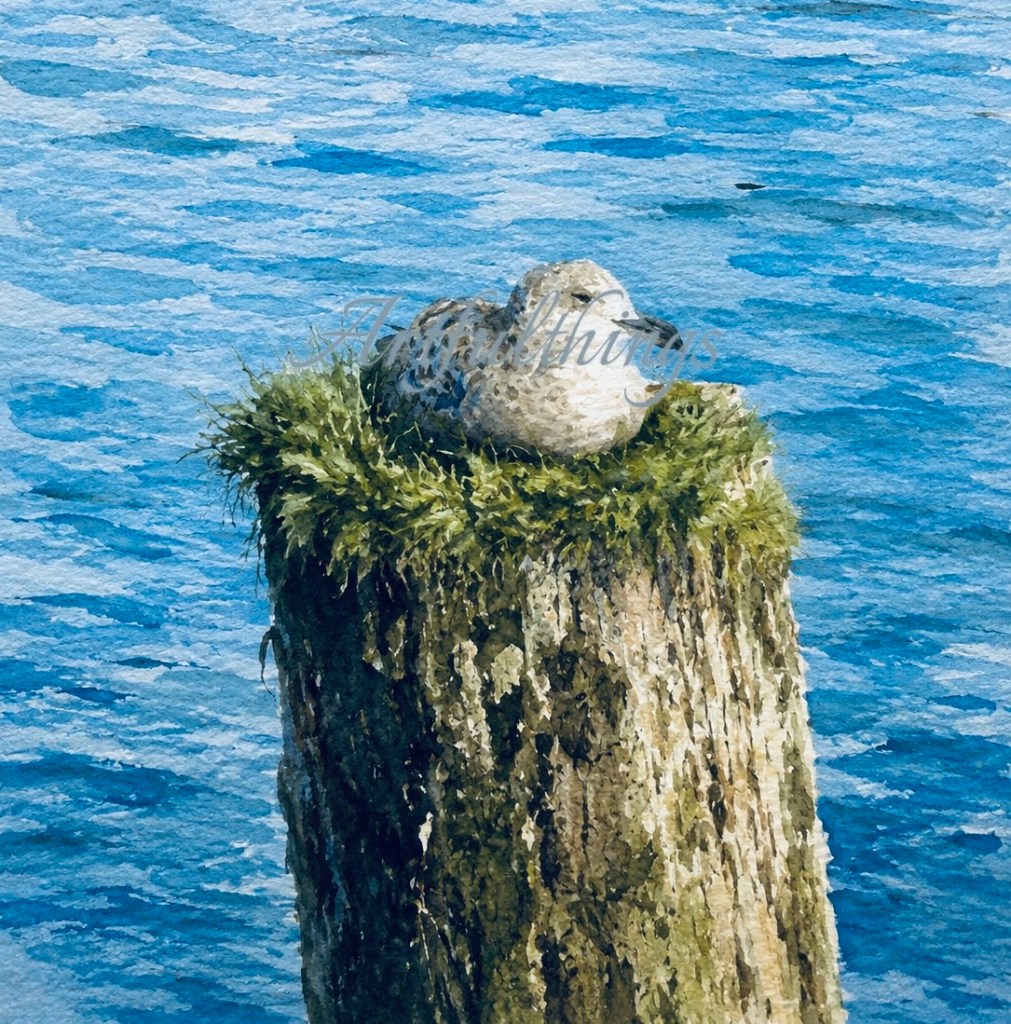
One of the most common mistakes beginners make in watercolor is trying to use every color they own in a single painting. It feels exciting at first. A huge palette looks full of possibility. But very often, the result is a painting that feels scattered, muddy, or difficult to read.
A limited palette solves a lot of that.
Using fewer colors creates natural harmony because the same pigments repeat throughout the painting. Even when the viewer doesn’t consciously notice it, their eye understands that everything belongs together. The painting feels calmer, more balanced, and easier to look at.
This is especially important in watercolor because the medium already has so much movement and transparency. If every area contains unrelated colors fighting for attention, the painting can quickly become overwhelming. A limited palette helps simplify things.
That doesn’t mean your work has to look boring.
In fact, some of the strongest watercolor paintings are created with surprisingly few pigments.
A beginner might think they need fifteen different greens to paint a landscape. In reality, a painting often becomes more convincing when those greens are mixed from just a couple of core colors. If your greens all come from the same blue and yellow combinations, they automatically relate to one another. The painting starts to feel unified instead of patchy.
The same idea works for florals, animals, architecture, and pretty much every watercolor subject.
A simple limited palette for beginners could look something like this:
- A warm yellow
- A cool blue
- A warm red
- A neutral earth tone like burnt sienna
That alone can produce an enormous range of colors.
You can create soft neutrals, rich darks, muted greens, glowing oranges, and beautiful shadow colors without constantly reaching for a new pan. More importantly, you begin learning how pigments interact with each other. That understanding matters far more than owning dozens of colors.
Limited palettes also improve readability in a painting.
When every object is painted with completely different high-intensity colors, the viewer’s eye has nowhere to rest. But when colors repeat throughout the piece, the composition becomes easier to follow. Your focal point stands out more clearly because the rest of the painting supports it instead of competing with it.
This is one reason professional artists often repeat small touches of the same color around a painting. A little bit of ultramarine in shadows, distant objects, or reflected light quietly ties everything together.
There’s also a practical side to working this way.
Using fewer pigments helps reduce muddy mixes. Many muddy watercolor passages happen because too many unrelated pigments were layered together. A limited palette naturally cuts down on that problem. Your mixtures stay cleaner because you’re learning the behavior of a smaller group of colors instead of trying to control everything at once.
If you want to practice this, try painting the same subject several times with only three or four pigments. A simple landscape works well for this exercise. So does a floral study.
You’ll probably notice something interesting after a while: instead of feeling restricted, you start feeling more confident.
You stop relying on convenience colors for every little thing and begin understanding how to mix what you actually need. Your paintings gain consistency. Your color choices become more intentional. And over time, your work develops a stronger personal style because your palette choices become part of your artistic voice.
Watercolor already asks us to simplify. A limited palette is one of the best ways to learn that skill. It teaches restraint, harmony, and control without making the process feel stiff or overworked.
Sometimes fewer colors create far more beautiful paintings.


 Artful things
Colorful comments appreciated